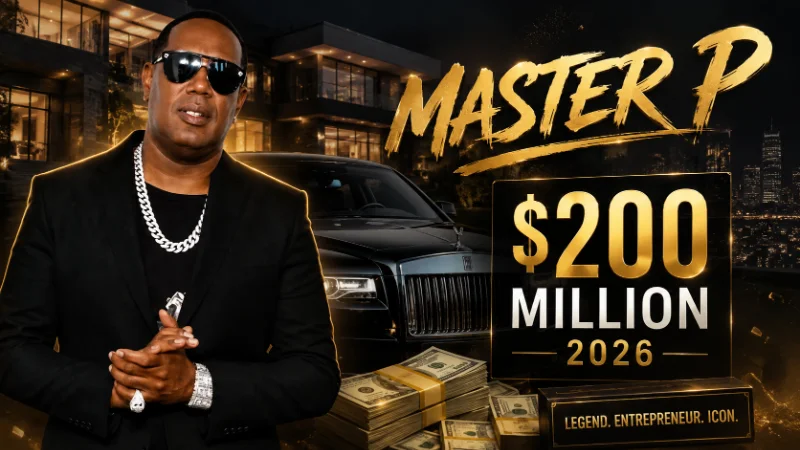
Master P is worth about $200 million, according to Celebrity Net Worth, which puts him among the wealthiest rappers to build a fortune mostly through ownership. Other sites print numbers anywhere from $198 million to $390 million, and that spread shows how hard it is to price a private business empire. Percy Miller has never published audited financials, so every figure below is an estimate and is labeled that way.
Most of that wealth traces back to a $10,000 settlement, a record shop in Richmond, California, and a distribution deal that let him keep his masters. Here is how those pieces added up, why the estimates disagree, and where his money comes from now.
Master P’s Net Worth at a Glance
The most common estimate is $200 million. It comes from Celebrity Net Worth and shows up again in several 2026 roundups of the richest rappers. Older figures and a few outliers run much higher.
| Source | Estimate | Context |
|---|---|---|
| Celebrity Net Worth | $200 million | Current estimate, widely repeated |
| Forbes (2013) | Nearly $350 million | Third richest figure in hip-hop at the time |
| Fortune (1999) | $361 million | Listed among America’s richest under 40 |
| Alux | $390 million | Highest figure found, no method given |
Net worth means assets minus debts. Private company stakes, real estate, and cash have to be guessed from the outside, and different sites guess differently. If you need one number to quote, $200 million is the safest.
Why the Estimates Disagree
The $350 million figure and the $200 million figure describe different moments. Forbes put Miller near $350 million in 2013, which made him the third richest figure in hip-hop then. Fortune had listed him at $361 million in September 1999, when No Limit was at its commercial peak.
Revenue gets mixed up with wealth, too. Celebrity Net Worth says his business empire generated more than $160 million in 1998 alone. That is money moving through companies, and artist payouts, production costs, and taxes come out before any of it reaches the owner.
Celebrity Net Worth also reports a claim that No Limit was worth $136 million by its own audit and that Miller was worth $350 million at the peak. That is a reminder that the highest numbers describe the late 1990s, not today.
Record totals vary as well. VIBE and Celebrity Net Worth use 100 million records sold, while Ebony cites an estimated 75 million for the No Limit catalog. Several 2026 net worth pages also repeat the $350 million number with no sourcing behind it, so treat any figure without a named source as a guess.
A Timeline of the Money
| Year / Period | Financial Milestone |
|---|---|
| Late 1980s | Miller uses a $10,000 family settlement to open a record store in Richmond, California. |
| 1991 | He releases his first album, Get Away Clean. |
| 1996 | He signs the Priority Records distribution deal. |
| 1997 | He launches No Limit Sports Management. |
| 1998 | Forbes ranks him 10th among the highest-paid entertainers. |
| 1999 | Fortune lists him at $361 million. |
| 2001 | The Priority deal ends and the label moves to Universal. |
| 2013 | Forbes estimates him near $350 million, and he releases The Gift. |
| 2020 | He launches the Uncle P food line. |
| 2026 | He talks publicly about taking Rap Snacks public. |
How a $10,000 Settlement Became No Limit Records
Percy Robert Miller was born on April 29, 1970, and raised in New Orleans. He grew up in the Calliope Projects, earned a scholarship to the University of Houston, and later studied business at Merritt College in the Bay Area.
When his grandfather died, the family received a malpractice settlement, and Miller put his $10,000 share into a record store in Richmond. The shop was called No Limit Records and Tapes, and it became the base for his label.
He started releasing his own music in 1991 with Get Away Clean on his In-A-Minute imprint. The bigger move came when he relocated the operation to New Orleans and built an in-house production team called Beats By the Pound.
The Priority Records Deal That Changed the Math
In 1996, Miller signed a distribution deal with Priority Records. No Limit kept full ownership of its master recordings and about 85 percent of sales, while Priority took 15 percent for pressing and distribution.
Owning the masters meant reissues, catalog sales, and licensing kept paying the company after the first release. For an independent label, that structure is the main reason this fortune was possible.
Snoop Dogg and the 1998 Surge
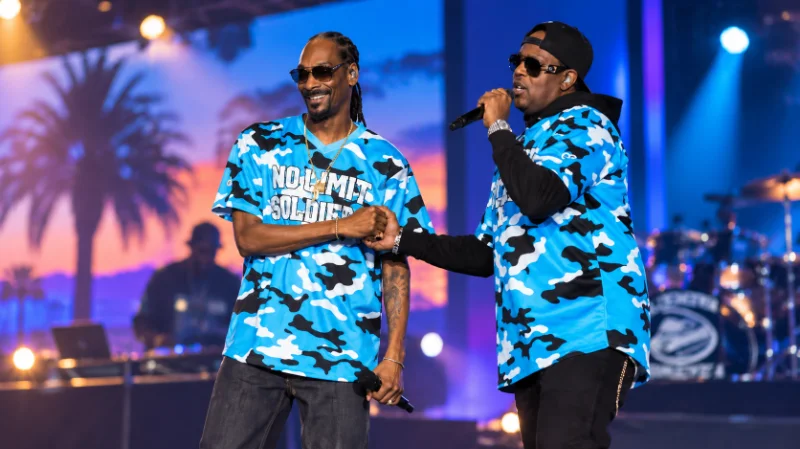
Snoop Dogg joined No Limit after his split from Death Row Records. Two of Miller’s brothers, Silkk the Shocker and C-Murder, were platinum-selling acts on the label as well, which kept much of the talent in the family.
Miller’s album Ghetto D reached number one on the Billboard 200 and went four times platinum. Its single “Make ‘Em Say Uhh!” also went platinum.
In 1998, Forbes ranked Miller 10th on its list of the highest paid entertainers, estimating his income at about $57 million. The label sold an estimated 75 million records across the decade.
What Happened After the Peak
The Priority deal expired in 2001, and No Limit signed with Universal Records. Snoop Dogg left when his three-year contract ended, and C-Murder stepped away to run his own label. No Limit later went bankrupt and returned as No Limit Forever Records.
Miller released his thirteenth album, The Gift, on that new label in December 2013. That history is the clearest reason older estimates run higher than recent ones. The label that made him rich peaked in the late 1990s, and the businesses that carry him now are different.
Films, Fashion, and a Basketball Detour
Alongside the label, Miller pushed into movies. He made films such as I’m Bout It, Foolish, and I Got the Hookup, and they extended the No Limit brand beyond records.
He also launched the P. Miller clothing line and founded P. Miller Enterprises, which TheRichest describes as an entertainment and financial conglomerate. Better Black Television, an online network, came out of the same company and was short-lived.
The Basketball Detour
Miller also played pro basketball. He played in the American Basketball League under coach Joe “Jellybean” Bryant, and was on the Charlotte Hornets roster during the strike-shortened 1998-99 NBA season. IMDb also lists a September 1999 contract with the Toronto Raptors.
The playing career was short. It ran alongside No Limit Sports Management, the agency he launched in 1997.
Where His Money Comes From Today
Rap Snacks
Miller is a limited partner in Rap Snacks, which James Lindsay created in 1994. AfroTech reports the chips, noodles, and candy sell in 40 cities and at national chains including Walmart, Kroger, Sam’s Club, and Target.
In August 2026, Miller told Forbes that taking the company public is the next goal, though no decision has been made. He framed it as a way for customers to become investors.
Miller also created Rap Noodles. He has said the idea came from watching how often his community buys instant noodles.
Uncle P’s Foods
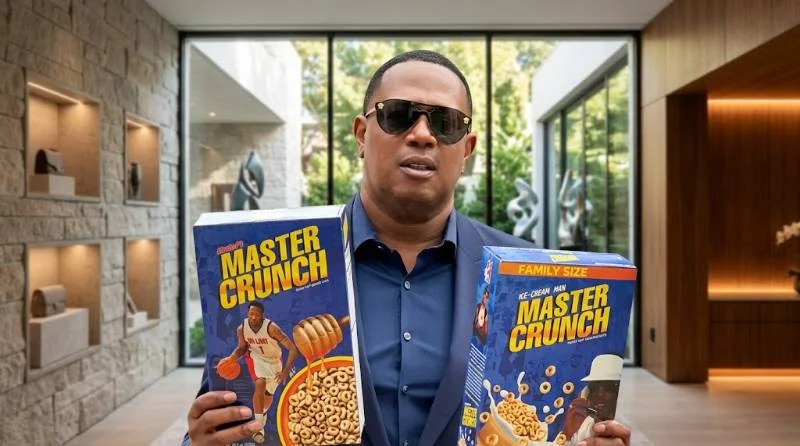
Miller launched the Uncle P line in March 2020, and a portion of profits goes to programs for children and elderly people in Black communities. The products include pancake mix, rice, grits, oatmeal, cereal, ramen, and seasonings.
He is chief executive of P. Miller Enterprises, which runs the line. He has said he started in corner stores and mom-and-pop shops and built outward from there.
Music, Film, and Sports Projects
VIBE reports that Miller worked as president of basketball operations at the University of New Orleans and announced a basketball sneaker with Max Out Sports. Music has not gone away either. No Limit and Cash Money met in a Verzuz battle in 2025, and the two labels planned a joint tour for September.
He also has a heist film, Motion, with Eddie Griffin, Tiffany Haddish, and Terry Crews. VIBE says he is weighing a release of about 200 vaulted songs.
Real Estate
Several sites mention real estate in New Orleans and Houston and a Richmond estate. None cite property records, so these holdings are not publicly confirmed.
How Much Does He Earn Each Year?
No reliable source publishes Master P’s annual income. Alux lists $70 million a year, but the page gives no method and is years old.
Rap Snacks is a limited partnership whose terms are private, so even his share of that business is not publicly confirmed. Treat any income number as an estimate.
Why His Business Model Still Gets Studied
Miller built No Limit when rap was still treated as an East Coast or West Coast business, and he did it independently from New Orleans. He has said the record sales earned the label respect because nobody else owned it.
The lesson people take from him is ownership. He kept his masters, put his own name on products, and moved into new categories when the record business slowed. That pattern is why his story gets repeated in conversations about generational wealth in hip-hop.
A balanced view includes the downside. The same label that made him a multimillionaire went bankrupt, and the release pace that built its reputation was hard to sustain.
What Could Change the Number Next
A few developments could change how this estimate reads over the next year:
- A Rap Snacks public offering, which Miller has discussed but not committed to
- Results from the No Limit and Cash Money tour
- The release of his vaulted songs and the film Motion
- A fresh, sourced estimate from a major business publication
His age (56 as of this writing), the $200 million estimate, and the Rap Snacks and tour plans all need periodic rechecking.