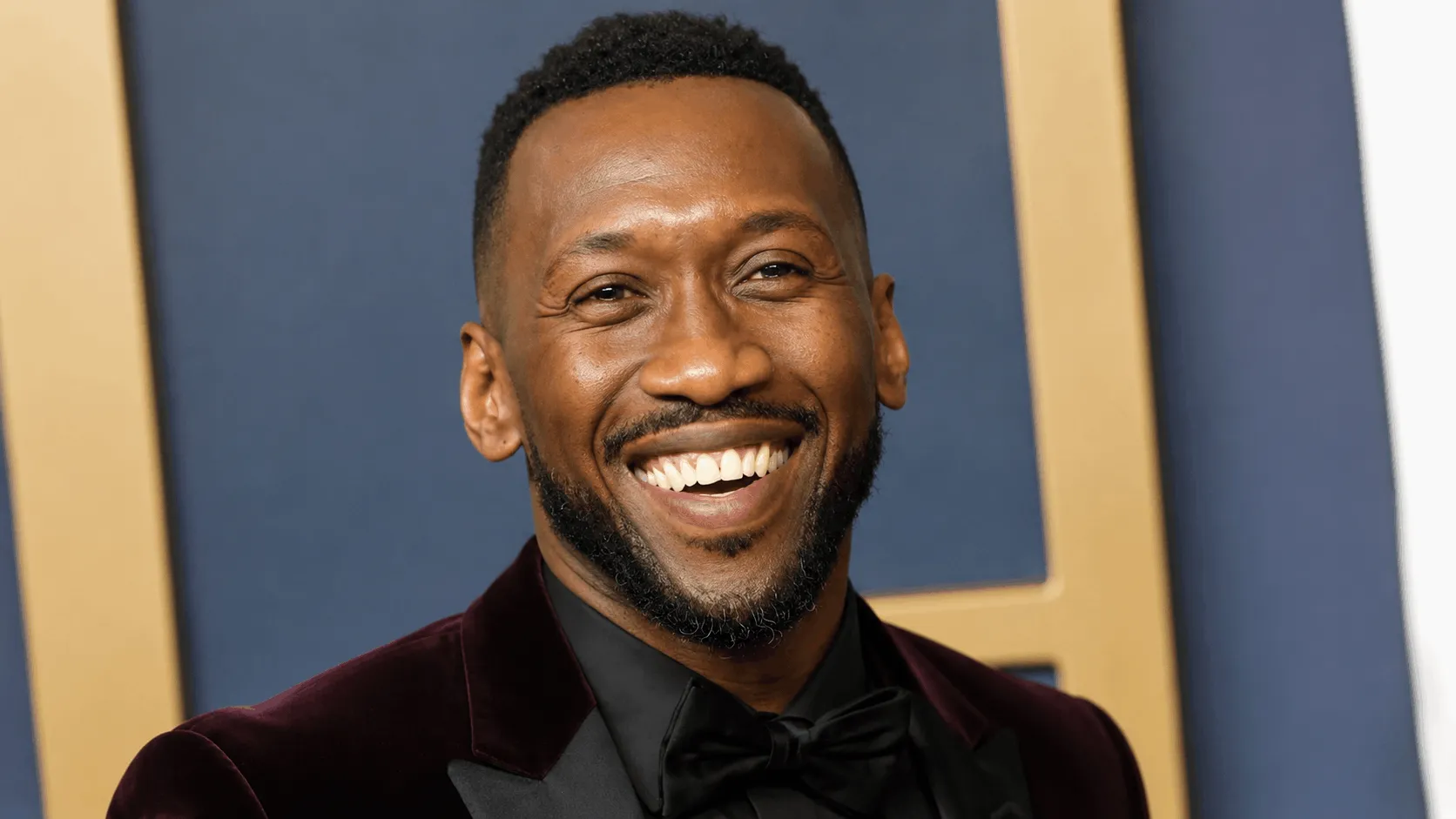
Mahershala Ali is an actor who has won two Academy Awards for Best Supporting Actor, first for Moonlight in 2017 and again for Green Book in 2019. Few working actors have rebuilt themselves as many times as he has, moving from college basketball to hip hop to television bit parts before Hollywood knew his name.
That pattern, starting over and landing somewhere better, runs from a basketball scholarship through a religious conversion to a superhero role that never got made, and it is still playing out in 2026.
From Oakland’s Basketball Courts to the Stage
Ali was born Mahershalalhashbaz Gilmore on February 16, 1974, in Oakland, California, and grew up nearby in Hayward. His mother was an ordained minister, and basketball, not acting, was his first serious pursuit. He earned a basketball scholarship to Saint Mary’s College of California and played through his undergraduate years.
A theater class during college changed his direction. After graduating, he enrolled at New York University’s Tisch School of the Arts and earned an MFA in acting, the same training ground that produced several of his future peers. That decision, made in his mid twenties, set up everything that followed.
Finding His Name and His Faith
In 1999, near the end of his time at NYU, Ali converted to Islam and joined the Ahmadiyya Muslim Community. He dropped the surname Gilmore and began working under the name Ali soon after, though he briefly used his full birth name, Mahershalalhashbaz, in his very first screen credits before shortening it.
The timing put him in a difficult position. He built a new religious identity in a Black household rooted in Christianity, then watched public attitudes toward Muslims shift hard after September 11, 2001. He has said in past interviews that his bank accounts were frozen and that he landed on a watch list, and his wife eventually stopped wearing the hijab in public after facing hostility. He has been direct about the fact that the discrimination was not new to him as a Black man, only differently shaped.
Early Roles and a Long Climb
Ali’s first credited television role came in 2001, playing Dr. Trey Sanders on Crossing Jordan. Smaller parts followed on NYPD Blue, Threat Matrix, and CSI, along with guest spots on shows like Law and Order: SVU. His first real foothold came with The 4400, a science fiction drama, where he played Richard Tyler for three seasons starting in 2004.
During this same stretch, Ali also recorded two rap albums, Corner Ensemble and Curb Side Service, under the stage name Prince Ali, a detail that rarely makes it into his more recent press coverage. His first major film role arrived in 2008, in David Fincher’s The Curious Case of Benjamin Button.
The next few years were quieter but steady. He took supporting parts in Crossing Over (2009) and Predators (2010), a lead role in the TV film The Wronged Man, a recurring spot on Alphas, and a small part in the acclaimed drama The Place Beyond the Pines (2012).
The Breakout: House of Cards and The Hunger Games
Ali spent 2011 and 2012 in a recurring role on Treme before landing the part that changed his career, Remy Danton on Netflix’s House of Cards, starting in 2013. The role ran through the show’s final season in 2016 and brought his first Primetime Emmy nomination.
At the same time, he joined The Hunger Games franchise as Boggs, an ally to Katniss Everdeen, appearing in both Mockingjay Part 1 (2014) and Mockingjay Part 2 (2015). Between House of Cards and The Hunger Games, Ali went from a working character actor to someone casting directors actively sought out.
2016, the Year Everything Turned Over
Nearly every project that made Ali a household name arrived within the same twelve months. In 2016 alone, he appeared in the historical drama Free State of Jones, took on crime boss Cornell “Cottonmouth” Stokes in the first season of Netflix’s Luke Cage, and played a supporting part in Hidden Figures, the drama about NASA’s Black women mathematicians.
Moonlight, the film that would define the year for him, also premiered in 2016, though its awards run stretched into early 2017. After roughly fifteen years of steady, mostly unglamorous television work, Ali suddenly had four notable projects releasing back to back.
Two Oscars in Three Years
Ali won his first Academy Award for Best Supporting Actor in 2017 for playing Juan, a drug dealer who becomes a father figure to the film’s young lead, in Barry Jenkins’s Moonlight. The film also won Best Picture, in a ceremony remembered as much for its envelope mix up with La La Land as for the wins themselves.
Two years later, Ali won a second Best Supporting Actor Oscar for playing classical pianist Don Shirley opposite Viggo Mortensen in Green Book, which also took Best Picture. That win made him the first Black actor to win the award twice in the same acting category. The New York Times later ranked him among the 25 greatest actors of the 21st century, and Time named him one of its 100 most influential people in 2019.
A Long List of Honors Beyond the Two Oscars
The full trophy case runs well past the Oscars. Ali also holds a British Academy Film Award, a Golden Globe Award, and three Screen Actors Guild Awards, including one for the ensemble cast of Hidden Figures. His Primetime Emmy Award, distinct from his acting nominations, came in 2020 for producing the documentary short We Are the Dream: The Kids of the Oakland MLK Oratorical Fest.
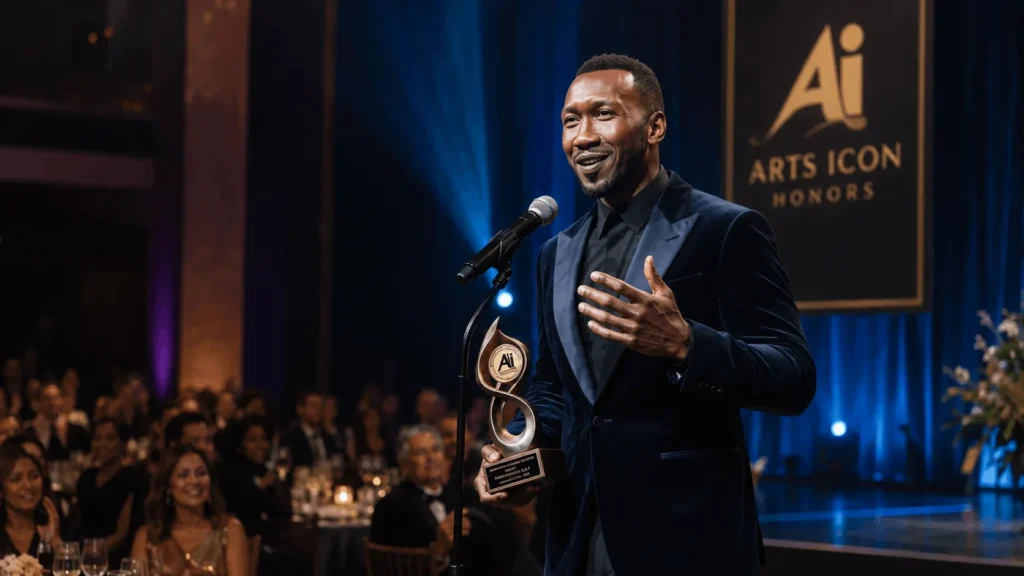
That detail tends to get flattened in shorter write-ups. Ali has been nominated for acting Emmys five separate times, for House of Cards, True Detective, Ramy, and his narration of the nature documentary Chimp Empire, but his one competitive Emmy win sits in a completely different category.
Beyond Awards Season: True Detective, Ramy, and Spider-Verse
Success did not push Ali toward safer choices. In 2019, he starred as a haunted police detective in the third season of HBO’s True Detective, and in 2020 he took a comedic turn in the second season of Hulu’s Ramy. Both performances earned him Emmy nominations, and both pulled him further from the prestige-drama lane that Moonlight and Green Book might have locked him into.
He also became an unexpected fixture in animated superhero films, voicing Aaron Davis in Spider-Man: Into the Spider-Verse (2018) and its 2023 sequel, Spider-Man: Across the Spider-Verse. Across his film and television work combined, the projects he has appeared in have grossed more than 3.3 billion dollars worldwide.
Family Life Away from the Camera
Ali married Amatus Sami-Karim, a fellow artist and Ahmadi Muslim he met at NYU, in 2013, after keeping the relationship largely private for years. Their daughter, Bari Najma Ali, was born in February 2017, the same week Ali won his first Oscar for Moonlight, a detail he has referenced when talking about how the two milestones landed almost on top of each other.
Ali has generally kept his home life out of interviews, talking about his career far more often than his marriage or parenting. What he has shared points to a household shaped by faith and routine rather than the entertainment industry itself.
A Reputation for Total Preparation
The athlete who once played college basketball never fully left. Ali has a reputation for training for a role the way he once trained for a season, building physical routines around a character months before a camera rolls. That habit paid off in an unexpected way when he spent more than a year training for a planned Blade film that Marvel never made, then carried that preparation directly into the physicality of a role he did end up filming.
The Blade Question, and What Came After
Marvel announced Ali as the star of a Blade reboot back in 2019. The project went through years of delays, rewrites, and a change of director, and by 2022 the filmmaker originally attached, Bassam Tariq, had exited. Aside from a brief voice cameo in a mid credits scene in Eternals, Ali never actually played the character on screen.
By the middle of 2026, Ali had stopped waiting on it. In an interview with GQ, he said he felt ready to move on from the Blade questions, adding that if Marvel had wanted to make the film, it would already exist. In the years the project sat in limbo, Ali kept working, including a starring role in the Netflix thriller Leave the World Behind in 2023 and a supporting turn opposite Scarlett Johansson in Jurassic World Rebirth in 2025.
What Mahershala Ali Is Doing Now
The Blade training did not go to waste. Ali reunited with Tariq, the director who had once been set to make that film, for an original thriller called Your Mother, Your Mother, Your Mother. Ali plays Latif, a religious hitman who has to raise his infant daughter alone across Houston after his wife’s death, in a cast that also includes John Cho and Giancarlo Esposito.
The film premiered at the Toronto International Film Festival before opening in select theaters on September 25, 2026, ahead of a wider release in October. It is the kind of project Ali points to when he talks about wanting original stories over franchise work going forward, closer in spirit to Moonlight than to a comic book adaptation.
Almost three decades after he first stepped onto a soundstage as a guest actor on Crossing Jordan, Mahershala Ali is still choosing roles that ask him to start over, on screen and off.